Tuesday, December 8, 2015

Socioeconomic Status and Priviledge

Privilege-a right or benefit that is given to some people and not to others; the advantage that wealthy and powerful people have over other people in a society; a right of immunity granted as a peculiar benefit, advantage, or favor: prerogative; especially: such a right or immunity attached specifically to a position or and office. -Merriam-Webster Dictionary Definition

Identities that may determine privilege:
  • socioeconomic class
  • race
  • age
  • gender
  • sexual orientation
  • ability 
All of these different identities are related to poverty as will be explained either in this post, or future posts that go more in depth on the topics (such as, the differences between white and black poverty or the feminization of poverty.) 

Social class is inextricably linked to poverty, as it places people in the group of "lower class." We believe this term is often used as having a double meaning, which places even more oppression on those who are below the poverty line.

 Race is apparent in many aspects of poverty, especially as it is known that women of color make significantly less than not only men, but also their white female counterparts.
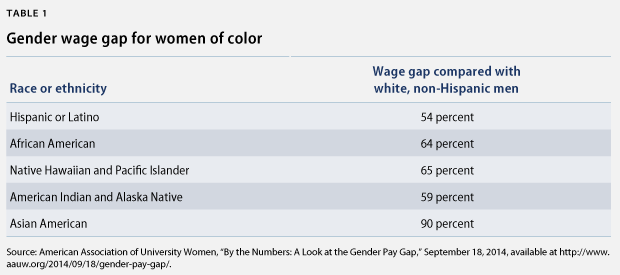
women of color wage gap

Sexual orientation is often linked to homeless youth who have been kicked out of their homes due to this very integral part of their identity. 

Those with disabilities typically have many medical bills not entirely covered by insurance, or may be unable to work due to their disability which can put them below the poverty line if the government doesn't believe they apply to get monetary disability benefits.

Benefits that come with privilege:
  • access to better education, housing
  • better healthcare
  • higher wages (applicable to both gender and race)
  • not facing systemic/institutionalized racism
  • thousands more

Classism: 

  • Prejudice against or in favor of people belonging to a particular social class; unfair treatment of people because of their social or economic class. -Merriam-Webster Dictionary Definition


We learned from a class activity that classism is differential treatment based on social class or perceived social class. Policies and practices are set up to benefit the upper class, at the expense of the lower classes, which leads to a large income and wealth discrepancy between classes. Wealthy people receive more privileges than those who are less so--these policies keep the lower class down and keep them from progressing. There are many examples of this, one informal, but widespread one, is that of inheritance. Many families are continually born into wealth, and therefore, power.

works cited:
http://referentiel.nouvelobs.com/wsfile/8781377162641.jpg -privilege definition
https://www.youtube.com/watch?v=hD5f8GuNuGQ -video 1
https://www.youtube.com/watch?v=uWSxzjyMNpU -video 2
https://www.americanprogress.org/issues/women/report/2015/04/14/110962/women-of-color-and-the-gender-wage-gap/ -WOC wage gap graph
http://www.merriam-webster.com/dictionary/classism -classism definition
http://www.classism.org/about-class/what-is-classism/ -Classism

Types of Poverty

Poverty: the state of one who lacks a usual or socially acceptable amount of money or material possessions  -Merriam-Webster Dictionary

  • Absolute Poverty: measures poverty in relation to the amount of money necessary to meet basic needs such as food, clothing, and shelter
  • Relative Poverty: defines poverty in relation to the economic status of other members of the society; people are poor if they fall below prevailing standards of living in a given societal context
When discussing the concept of absolute poverty one must note that it is not concerned with broader quality of life issues or with the overall level of inequality in society. The concept therefore fails to recognize that individuals have important social and cultural needs. An important criticism of both concepts is that they are largely concerned with income and consumption. This has significant affect on ********

Differences Between White Poverty and Black Poverty

      It is shown that the poverty experienced by African Americans and that of white Americans is a very different experience. The poverty experienced by the black population is much more isolated, as well as concentrated. Studies have shown that it is much more likely for a poor black family is more likely to live in a neighborhood where everyone is poor than white families. "In St. Louis, 29.5% of poor African Americans live in concentrated poverty. Among poor whites, just 1.6 do," (New York Times). 

     This concentration of poverty is often referred to as the "double burden of poverty." Living in uniformly poor neighborhoods restricts access to many things, such as better schools, as public schools receive their money based on taxation in regards to property in the area. The reason why concentrated poverty is an increasing problem relates to how many, especially African Americans are continuously left behind. This is due to things such as systemic discrimination that exists within the United States. As discussed in the post about gentrification, there are also modern zoning laws that keep the poor out of wealthier areas.   

Works Cited:
https://www.washingtonpost.com/news/wonk/wp/2015/08/12/black-poverty-differs-from-white-poverty/
http://www.unesco.org/new/en/social-and-human-sciences/themes/international-migration/glossary/poverty/

Sunday, December 6, 2015

Poverty Statistics


According to the World Bank, 1.5 billion people are living in extreme poverty. This means they are living below the international poverty line of $1.25/day. Using a new $2.00/day poverty line, it has been found that 2.6 billion people are living below that line. (World Bank, 2015)

Poverty is linked to 30% of deaths across the world:

  • starvation (hunger and malnutrition affect over 850mil people, even though the current food production could feed everyone, and then some.)
  • sanitation-induced diseases (bad sanitation threatens the lives of over 2.5 billion people.)
  • lack of water (over one billion people do not have access to clean water.)
  • lack of healthcare accessibility
We have found when looking for poverty statistics, it is important to look at the source. Many may sugarcoat the evidence to make themselves appear better, such as the World Bank. This brings up an issue we won't go too into depth about, but it is about rigged poverty lines that exist around the world. This is evident in the way that the initial poverty line measured was that of $1.25/day.


Works cited:
http://www.poverties.org/images/world-population-living-poverty-line.png - Poverty around the world
http://www.poverties.org/poverty-statistics.html
https://s-media-cache-ak0.pinimg.com/736x/39/d1/6a/39d16ae10a0ec897756d49c14f819a04.jpg -Poverty infographic

Friday, December 4, 2015

Resorts and Slums

To include a more global aspect of our project 
we focused on three areas worldwide:


  • Hawaii, United States
  • Rio De Janeiro, Brazil
  • Marseille, France
HAWAII

>Supplemental poverty rate 2011-2013: 18.4% (5th highest)
>Official poverty rate: 12.4% (18th lowest)
>State price level: the highest
>Pct. without health insurance: 6.7% (2nd lowest)
>23% increase in its unsheltered homeless population between 2014 and 2015

The differences between the supplemental and official poverty rates are explained through the state's exceedingly costly living. "Hawaii's average cost of rent in 2012 was 60% more expensive that the average nationwide and the highest of any state." This remote state also has some external factor including it's geographical location that put constraints on the people. Now, how can a state's location take affect on the people? Well, because the electricity is mainly supplied through petroleum power plants that have to be imported from out of state, the utility costs are driven up up up. In fact, Hawaii has one of the highest utility bill's in the nation. 

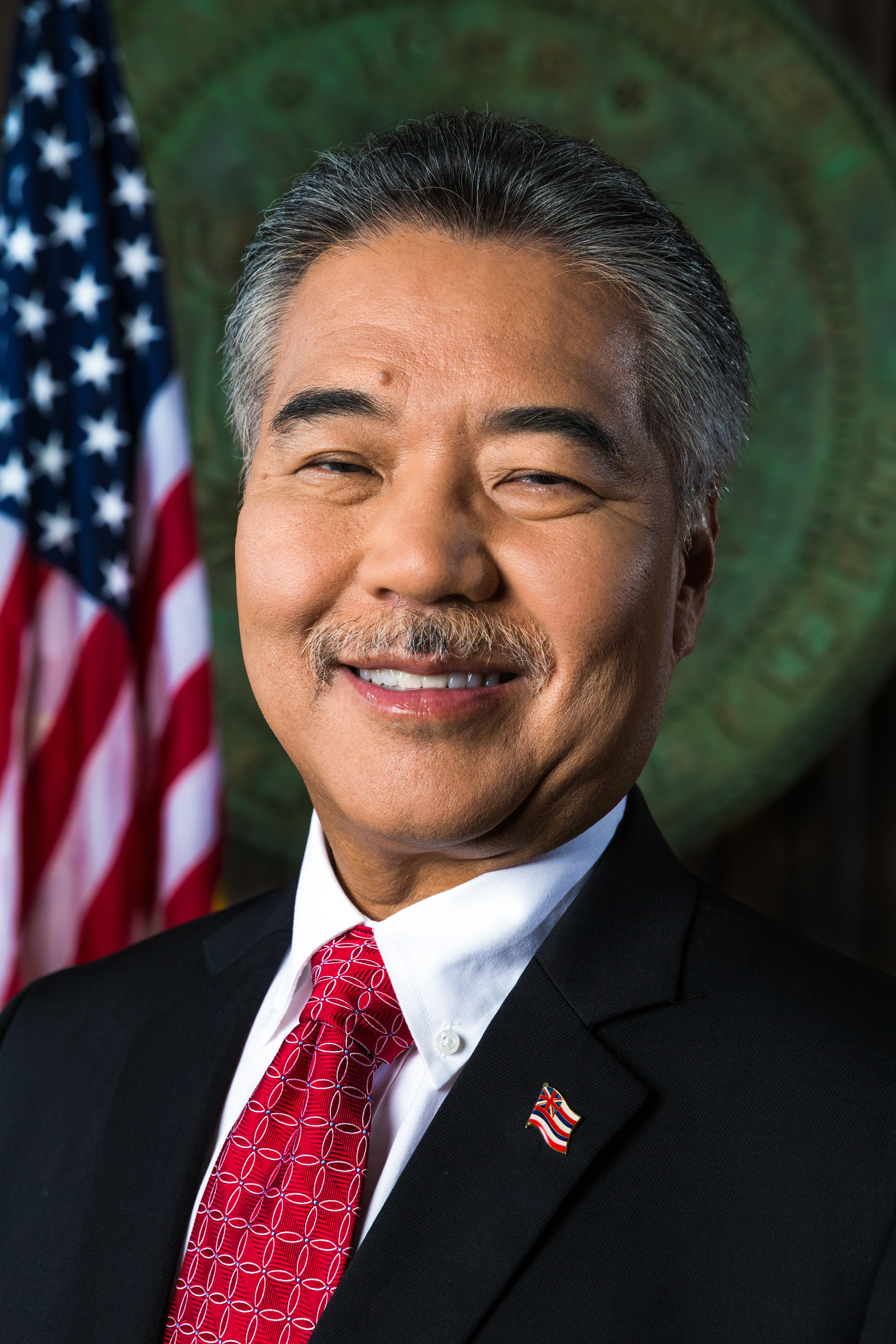
Hawaii Governor Declares Homelessness 'State of Emergency'
CATHY BUSSEWITZ-The Huffington Post
Gov-Ige-Aloha-Shirt-HI-Res.jpg
"There were 7,260 homeless people in Hawaii at the latest count, meaning Hawaii has the highest rate of homelessness per-capita of any state in the nation." Scott Morishige is the state homelessness coordinator and estimates that there are $1.3 million to invest in the expansion and improvement of services to homeless residents, including a new large emergency shelter. The in progress program is called, Housing First, allowing people to seek out their help and aid without having to sober up or treat their mental illnesses first. In addition, they want to be able to help people pay rent and deposits they may owe.Their sole focus is getting the residents the necessary things to thrive and start fresh. Everyone deserves a second chance and that's what this program is trying to offer and set up for their locals. "By coordinating with service providers, more than half of the estimated 300 residents of the encampment, including 25 families, were moved into shelters and permanent housing" the governor said.


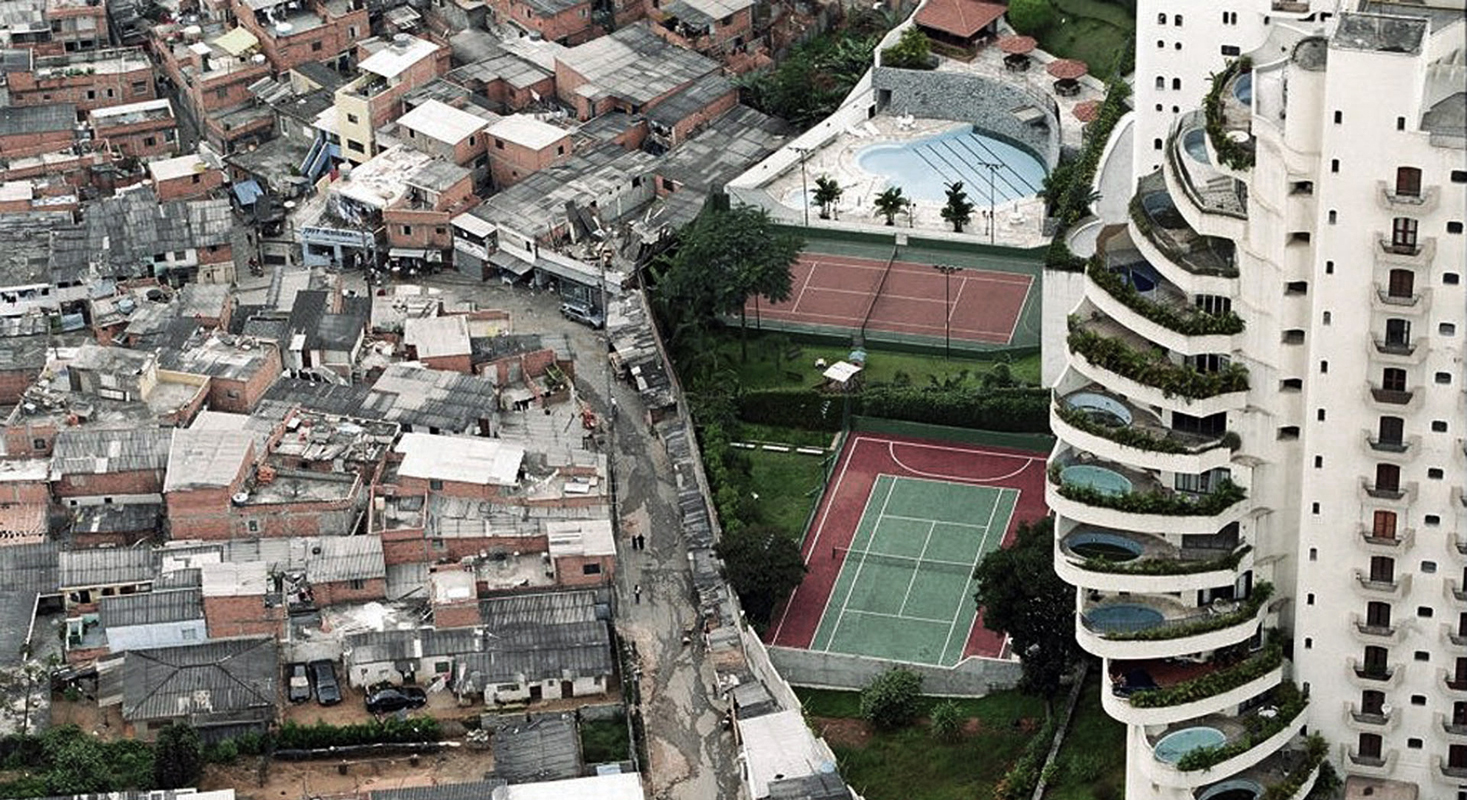
RIO DE JANEIRO

>22.03% of the 6,323,037 residents
>9.76 million people
>According to the new report, there are 1,393,314 people in 763 favelas in Rio, ahead of Sao Paulo, whose population in favelas is listed as 1,280,400
>Growth of favela population of 27.65 percent in ten years.
>See more at: http://riotimesonline.com/brazil-news/rio-politics/rios-favela-population-largest-in-brazil/#

Barry Varkel- commentary on the article 
"Brazil is now the 6th largest economy in the world, having just overtaken the UK in terms of GDP. Minimum wage is now a legislated R$545 per month to be paid thirteen times a year which is set to rise to R$800 by 2015. The Brazilian middle class has swelled by 29 million souls. Twenty million have been elevated above the poverty line. Yet the favela population in Rio increased by 27.5% in the last ten years. So, my question is: who is lying? I cannot believe that all is well in Brazil when so many people live in sub-standard housing. Surely the urban poor are the barometer for the economic wellness of the nation as a whole. In a country that has one of the highest Gini-coefficients in the world, standing at 54 as determined by The World Bank in 2009, these amazing statistics and feats must be tempered with a massive dose of sobering realities. Brazil honestly does not have the right to brag when 22% of the population in a city such as Rio live in slums."


https://citygeographics.files.wordpress.com/2013/11/rioeconomicgraphs.png 

https://citygeographics.files.wordpress.com/2013/11/riosocialgraphs.png 


http://www.bbc.com/news/world-latin-america-27635554 

I suggest visiting this extra to read more on the favelas. It was one of my favorite articles on the subject and gives you a sympathetic feeling as you are able to meet some of the faces of poverty.The article follows the stories of six residents of the Rio Favelas and what their life is like on a daily basis. It includes personal quotes, truly moving, that because I don't know them, act as a personality type to me. From what I can see the people there are very friendly and help each other out. They try to stick together and be supportive. 

MARSEILLE
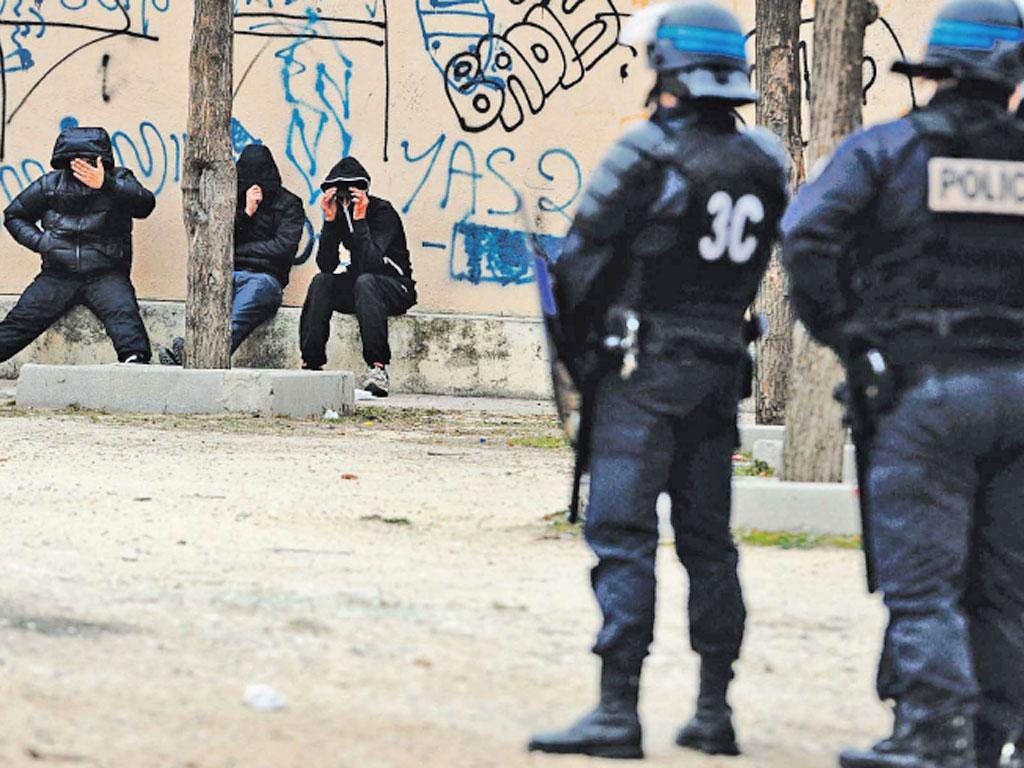
Named Europe's most dangerous place to be young-2013
http://www.independent.co.uk/news/world/europe/marseille-europes-most-dangerous-place-to-be-young-8166738.html 
Samia Ghali is the mayor of the 15th and 16th arrondissements encompassing basically all poor northern districts of Marseille. She stated that the drug-related violence in northern Marseille had escalated to the point where only the army could overcome it. "She called on the government to deploy troops to confiscate the cheap automatic weapons flowing in from the Balkans and North Africa and to interrupt a drug trade which is, she says, conducted with impunity." 


"There is a suicidal instinct, a desperation in some of these boys. It starts with failure and rejection at school and the lack of jobs. They see no future. They live for the present, in a world of easy money and, now, violence."

There is also an article from The Muslim Issue that illustrates the rise in violence, riots, and rape in the streets of Marseille. They say it is due to the increasing numbers of Muslim immigrants into the city, however, it also seems to be somewhat biased: "it has been massively colonised by Muslims, and they are now reproducing there the conditions found in their home countries." Also, "As they grow in population, they come to believe they can impose the will of Islam on the French people, and when they don’t get their way, they often resort to violence." 
https://themuslimissue.wordpress.com/2013/12/29/marseilles-is-now-30-40-muslim-excessive-violence-riots-and-rapes-are-turning-it-into-the-most-violent-city-in-europe/ 

**We talk more about the causes and effects of topics including outsourcing and displacement in our post about Poverty Governance**


WorksCited: 
http://img.huffingtonpost.com/asset/scalefit_630_noupscale/5621b53d1200002e007e5589.jpeg?cache=KrKgtBgAkk -hawaii slums image
http://referentiel.nouvelobs.com/wsfile/8781377162641.jpg -france slums image
http://pr2012.aaschool.ac.uk/submission/uploaded_files/DIP-17/hwui%20zhi.cheng-paraisopolis3.jpg -rio slums image
http://www.huffingtonpost.com/entry/hawaii-governor-declares-homelessness-state-of-emergency_5621b2a7e4b02f6a900c8eb8
http://www.usatoday.com/story/money/business/2014/11/01/24-7-wall-st-poverty-states/18104313/
http://povertydata.worldbank.org/poverty/home
https://www.census.gov/hhes/povmeas/data/supplemental/public-use.html

Gentrification at at Glance


     Gentrification refers to the buying, along with renovating, of houses within urban neighborhoods. This process leads to higher property values, and in turn, displaces lower-income families and small businesses. This concept is thought to be a result of increased interest in a certain area or environment. "In a community undergoing gentrification, the average income increases. Poorer pre-gentrification residents who are unable to pay increased rents or property taxes may find it necessary to relocate." The typical "gentrifiers" are affluent and have professional-level service industry jobs and favor a large consumerist culture. While it is not always the case, young, single women, artists, and the gay community are those who are often identified as gentrifiers.

Maxine Wright gives a primary account of the effects of gentrification in her poem "Planned Obsolescence," performed at CUPSI (College Union Poetry Slam Invitational) this year.


Maxine Wright - "Planned Obsolescence" (CUPSI 2015)
While there are some positive aspects of gentrification, they really only benefit those who are new-comers to the area. There are many downfalls and consequences. Some of these include, but are not limited to: loss of affordable housing, commercial/industrial displacement, loss of social diversity, community conflict, and homelessness. The Gentrification Reader defines the displacement of those living in urban areas that can no longer afford it as the "forced disenfranchisement of poor and working class people from the spaces and places in which they have legitimate social and historical claims." Those who are displaced are usually minority, elderly, or transient groups. The displacement can happen for a number of reasons, but there are two defined "waves." The first refers to those who are currently renting. With the increased interest in the area, there is no motivation for landlords to keep the current renters they have over the affluent renters looking for a place to live. The second "wave" focuses more on the owners of residential units. The rise of property values leads to increased tax assessments, and many are not able to cover this expansion in cost. Those who suffer the impacts of gentrification lack the economic resources that are necessary to both compete with and fulfill these changes, as well as historically/statistically lack political power. Therefore, they are easily exploited  and are eventually forced to leave due to their "inability to resist the gentrification process."

*If the poetry piece was something that interested you, take a look at some information on Poverty SLAM, a program made and conducted in 2014 in hopes of inspiring teens to find responses to poverty through both a summit as well as a competition: https://www.ujafedny.org/event/view/povertyslam-webinar/.
Additional information and an extension of the discussion appears in our post on the reaction between resorts and slums.
Works Cited:

Loretta Lees, Tom Slater, and Elvin Wyly, Gentrification Reader, p. 196. © 2008 Routledge.; Rowland Atkinson and              Gary Bridge, eds., Gentrification in a Global Context: the New Urban Colonialism, p. 5. © 2005 Routledge.
https://en.wikipedia.org/wiki/Gentrification#Gentrifier_types
https://www.ujafedny.org/event/view/povertyslam-webinar/

Tuesday, December 1, 2015

Introduction

Poverty: the state of one who lacks a usual or socially acceptable amount of money or material possessions. (Merriam-Webster)

*It is important to note that the line of poverty is different across different countries and regions in the world, and is subjective to context.

Why We Chose to Focus on Poverty:

      Whitney: Poverty is not something I was familiar with growing up. I have always been part of a middle-class family, and therefore, did not put much thought into the nuances of the subject(s). I was extremely interested by the documentaries we watched in class because they put a face to poverty. As a psychology major, I wanted to find out what the lasting effects of poverty are, and what circumstances lead to poverty. Traveling has always been a main goal of mine, but with this look at how the construction of resorts can lead to displacement of natives, I have a deeper understanding of the tourism industry in relation to poverty.

Stephanie: I became first interested when we discussed in class they way that different people identify. More often than not the way one identifies takes some sort of effect on their success rate in life. Those who are part of a minority group of some kind are seen as inferior and it's been proven that they are, in some way or another, less successful than the dominant group (White, Male). Now not all identities have to do with race, age, or gender although that is usually the most obvious. One can also identify with a certain social class, sexual orientation, or disability. Although the connection isn't as direct, this is where my interest in poverty was sparked. I thought it was crazy that a person can be born into a hopeless situation and have to struggle from the minute they open their eyes until the day they die. This obviously isn't the outcome of all cases, but it still saddens me to see, especially in children, the inequality and segregation that still exists on the basis of physical features or family income. Our humanity has turned numb but I still carry hope with me for our caring human nature to eliminate poverty. Like Whitney, I enjoyed the in-class documentaries on the slums around the world. It was extremely eye-opening and to place a face on poverty and see the people going through their daily lives as best they can really hit home for me. I am an extremely sympathetic person and I hope though this blog I can do our research and learn more about it and how to help the elimination efforts.

Why We Chose a Blog Format:
       We chose to use a blog format in order to use multiple types of media to synthesize our research on the different topics regarding poverty. These different items include, but are not limited to: documentaries and poetry that give first-hand accounts of poverty, maps and charts to demonstrate the statistical evidence we present, readings (both assigned within the political science course and otherwise), and TedTalks by individuals knowledgeable on the subjects to give a more well-rounded view.

    Works cited are available at the end of every post.